Priority Legislation
 The Tennessee Counseling Association (TCA) is committed to advocating for the counseling profession and the clients we serve across the state of Tennessee. During each legislative session of the Tennessee General Assembly, TCA’s Public Policy Committee monitors legislation that may impact professional counselors, counselor education programs, and access to mental health services. The Tennessee Counseling Association (TCA) is committed to advocating for the counseling profession and the clients we serve across the state of Tennessee. During each legislative session of the Tennessee General Assembly, TCA’s Public Policy Committee monitors legislation that may impact professional counselors, counselor education programs, and access to mental health services.
This page highlights priority legislation that the Public Policy Committee is actively tracking during the current legislative session. Updates will be posted as bills move through the legislative process.
TCA may take positions on legislation when it directly affects the counseling profession, professional licensure, or client care. Our goal is to keep members informed, raise awareness, and support advocacy efforts that protect the integrity of the counseling profession and the public we serve.
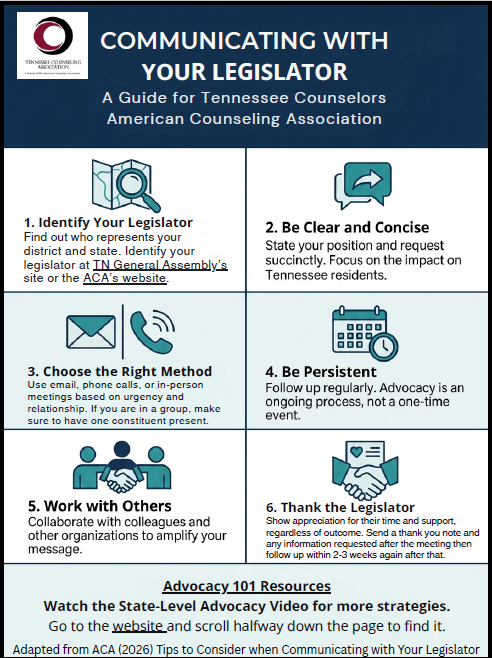
Don't forget these helpful hints when communicating with your legislators!
Chiles v. Salazar
The Tennessee Counseling Association expresses serious concern regarding the recent Chiles v. Salazar decision overturning Colorado’s prohibition on conversion therapy. This ruling raises significant implications for client welfare, professional counseling practice, and the ethical standards that guide our field.
Extensive research across medical and mental health disciplines has consistently demonstrated that Sexual Orientation and Gender Identity Change Efforts (SOGICE), including conversion therapy, are associated with increased risks of depression, anxiety, substance use, self-harm, and suicidality, particularly among LGBTQ+ youth. These practices are not supported by scientific evidence and stand in opposition to the core counseling principles of beneficence, nonmaleficence, autonomy, and respect for human dignity.
As an organization aligned with the American Counseling Association, we affirm that ethical counseling is grounded in evidence-based, affirming, and client-centered care. Interventions that seek to alter or suppress an individual’s identity are inconsistent with these standards and undermine the integrity of the counseling profession.
While the Court’s decision focused on legal interpretations of speech, counseling is a regulated professional practice that must prioritize client safety and well-being. This ruling may have broader implications for how states uphold protections against harmful practices, making continued advocacy essential.
We stand in solidarity with LGBTQ+ individuals and reaffirm our commitment to providing safe, inclusive, and affirming spaces for all clients. We also support counselors, educators, and supervisors who remain dedicated to ethical practice. The Tennessee Counseling Association will continue to advocate for policies, education, and protections that promote client welfare and uphold the highest standards of the counseling profession.
The Tennessee Counseling Association expresses serious concern regarding the recent Chiles v. Salazar decision overturning Colorado’s prohibition on conversion therapy. This ruling raises significant implications for client welfare, professional counseling practice, and the ethical standards that guide our field.
Extensive research across medical and mental health disciplines has consistently demonstrated that Sexual Orientation and Gender Identity Change Efforts (SOGICE), including conversion therapy, are associated with increased risks of depression, anxiety, substance use, self-harm, and suicidality, particularly among LGBTQ+ youth. These practices are not supported by scientific evidence and stand in opposition to the core counseling principles of beneficence, nonmaleficence, autonomy, and respect for human dignity.
As an organization aligned with the American Counseling Association, we affirm that ethical counseling is grounded in evidence-based, affirming, and client-centered care. Interventions that seek to alter or suppress an individual’s identity are inconsistent with these standards and undermine the integrity of the counseling profession.
While the Court’s decision focused on legal interpretations of speech, counseling is a regulated professional practice that must prioritize client safety and well-being. This ruling may have broader implications for how states uphold protections against harmful practices, making continued advocacy essential.
We stand in solidarity with LGBTQ+ individuals and reaffirm our commitment to providing safe, inclusive, and affirming spaces for all clients. We also support counselors, educators, and supervisors who remain dedicated to ethical practice. The Tennessee Counseling Association will continue to advocate for policies, education, and protections that promote client welfare and uphold the highest standards of the counseling profession.
SB 2227/ HB 2539
|
|
Update as of 4/2/26:
In a time when advocacy truly mattered, our counseling community showed up—and it made a difference. As you may know, the LPC/MFT/CPT Board was successfully removed from SB 2227 / HB 2539 during the recent House Health Committee session. This outcome reflects the strength of a unified voice and the importance of sustained, thoughtful engagement.
This progress is also a direct result of the consistent and dedicated advocacy of our TCA members. Through emails, calls, meetings, and ongoing outreach, you demonstrated a deep commitment to protecting our profession. Your efforts ensured that legislators heard not only our concerns, but also the real impact these decisions have on counselors and the communities we serve.
Also worth noting is the collective effort behind this progress. This was not the work of one group alone—it was a shared effort grounded in collaboration, professionalism, and a strong commitment to the future of counseling in Tennessee. We extend our sincere appreciation to the American Counseling Association (ACA) and to our fellow professional organizations across Tennessee who stood with us throughout this process. Your outreach, encouragement, and advocacy helped elevate our concerns and demonstrated the strength of a unified professional community within our state.
We also appreciate the legislators who took the time to listen, engage in dialogue, and work with us toward a positive outcome. We would like to especially thank Leader Lamberth for his willingness to work collaboratively and support efforts that led to this amendment, and to recognize Rep. Clemmons for speaking in opposition to the bill and helping elevate the concerns of our profession during the legislative process. If you feel inclined, we encourage you to reach out and share your appreciation with both legislators for their support of the counseling profession.
There is still more work ahead as this legislation continues through the process, and we will remain actively engaged. We will continue to keep you informed as updates become available.
For now, we want to pause and simply say thank you—for your advocacy, your professionalism, and your commitment to this field.
Update as of 3/23/26:
The House Health Committee is scheduled to be heard on Tuesday, March 24th at 1:30pmCST. Please use this template email to contact the members of the Health Committee.
- Bryan Terry, Chair, [email protected]
- Tom Leatherwood, Vice-Chair, [email protected]
- Shaundelle Brooks, [email protected]
- Kip Capley, [email protected]
- Michele Carringer, [email protected]
- John Ray Clemmons, [email protected]
- Andrew Farmer, [email protected]
- Ron M. Gant, [email protected]
- John Gillespie, [email protected]
- Esther Helton-Haynes, [email protected]
- Caleb Hemmer, [email protected]
- Gary Hicks, [email protected]
- Tim Hicks, [email protected]
- Timothy Hill, [email protected]
- Sabi 'Doc' Kumar, [email protected]
- Susan M. Lynn, [email protected]
- Brock Martin, [email protected]
- Sam McKenzie, [email protected]
- Bo Mitchell, [email protected]
- Iris Rudder, [email protected]
- Paul Sherrell, [email protected]
- Ron Travis, [email protected]
- Mark White, [email protected]
- Ryan Williams, [email protected]
 Update as of 3/21/23 Update as of 3/21/23
We are excited to share an update following our recent Day on the Hill (DOH) event. It was a great success!
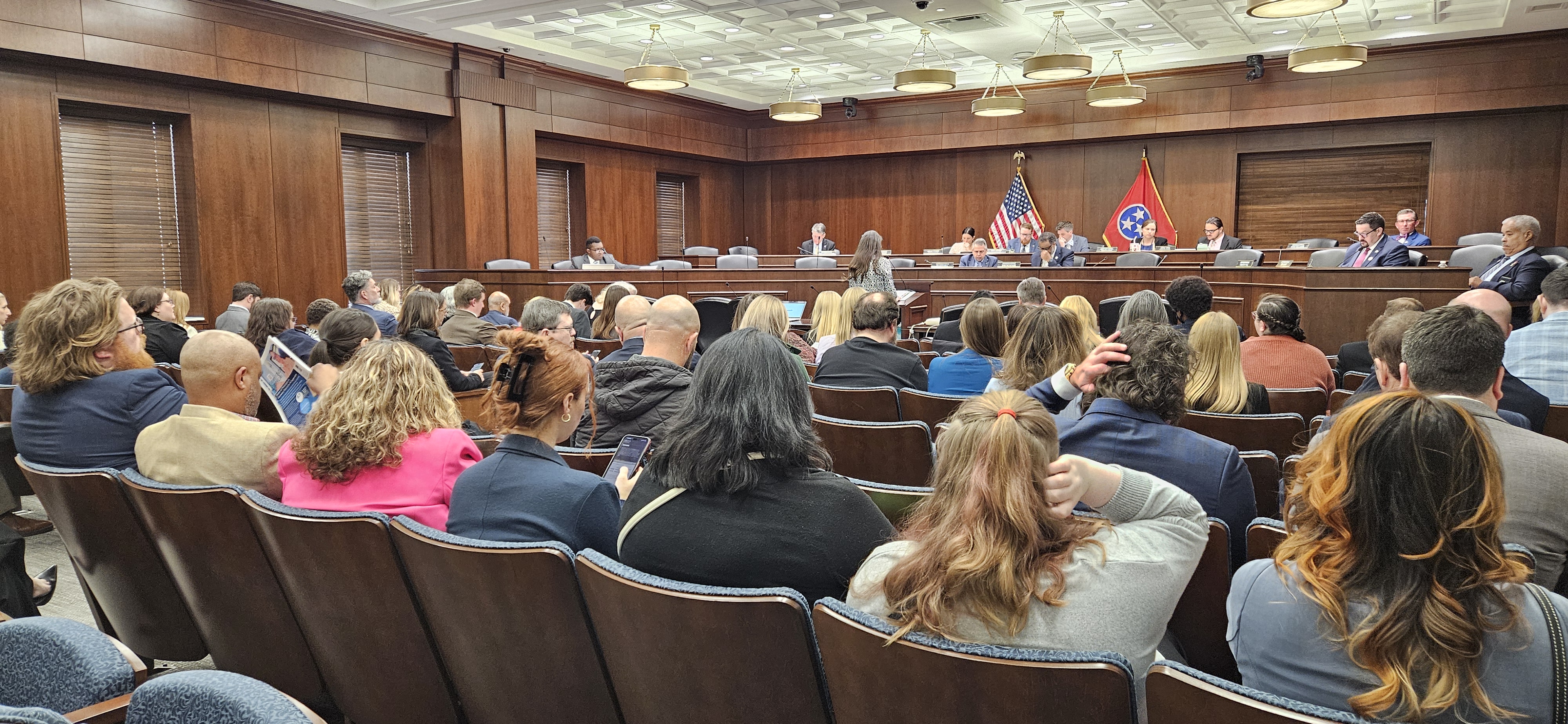
We were proud to have 12 TCA members and two teen/student guests in attendance for a full and engaging day of advocacy, learning, and connection. Participants earned 1.5 continuing education (CE) hours while deepening their understanding of legislative advocacy. The day included a self-guided tour of the Capitol, the opportunity to hear Representative Aftyn Behn share about her experiences advocating as both a social worker and a member of the House of Representatives, meetings with personal legislators, attendance at a Health Subcommittee meeting, and a meaningful debriefing session.
The highlight of the day was the opportunity to connect with fellow counselors who are passionate about promoting the health and well-being of individuals, families, communities, and the counseling profession and removing barriers that inhibit growth and development. TCA leadership was especially encouraged to see both experienced and emerging counselor-advocates come together to learn, mentor one another, and build relationships.
Feedback from participants has been overwhelmingly positive. Attendees shared that the event “was valuable for their professional development 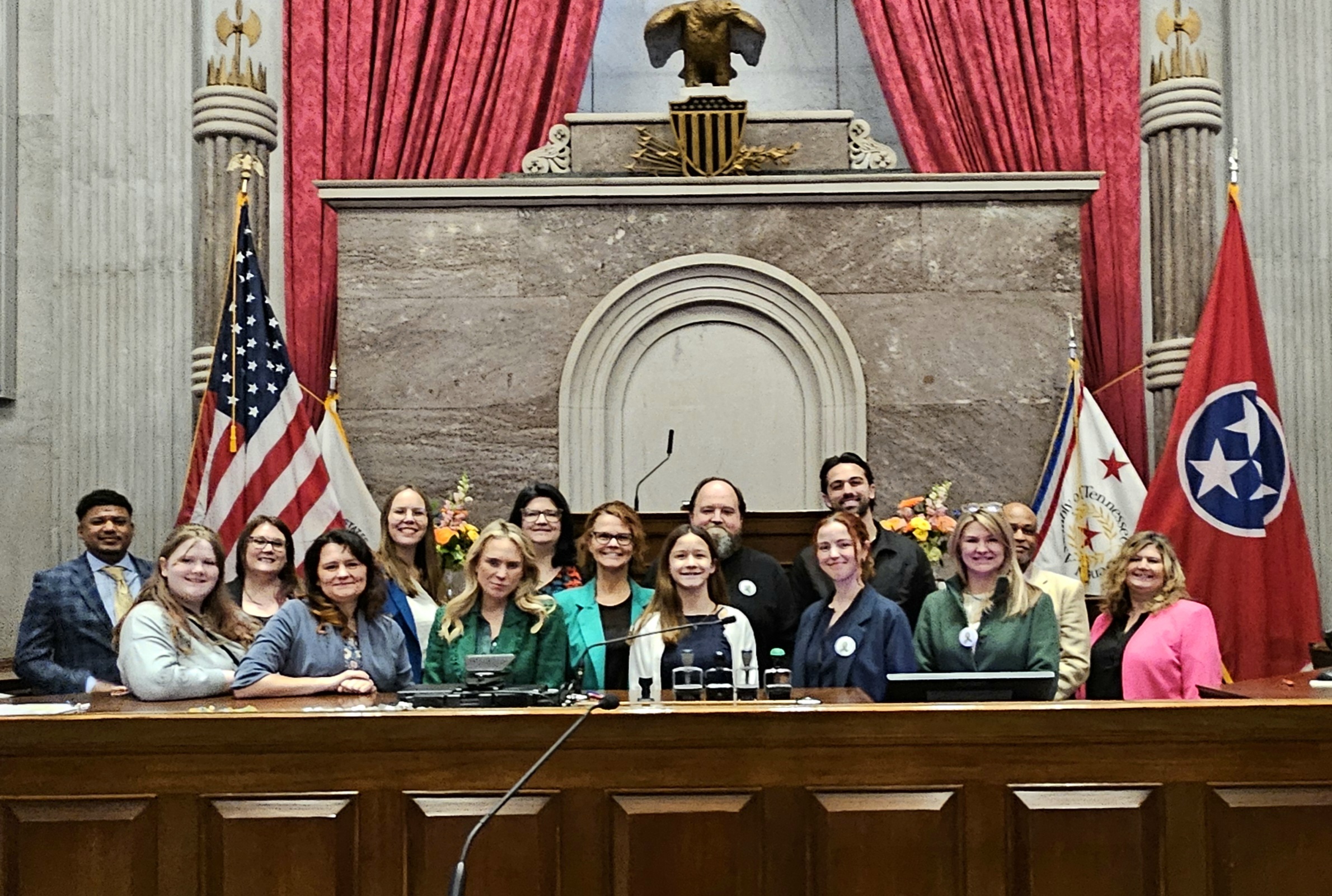 as an advocate” and that they “feel more confident in engaging in advocacy after the event.” Some of the takeaways included: as an advocate” and that they “feel more confident in engaging in advocacy after the event.” Some of the takeaways included:
- “Advocacy is essential, less scary once you do it, and can even be fun!”
- “It was GREAT!”
- "I had so much fun. It has been a long time since I have been this excited over something in the counseling field."
We also want to provide an update regarding SB 2227 / HB 2539. TCA leadership, along with members from other counseling organizations, were present at the Health Subcommittee meeting. While we had strong representation, we were not granted permission to speak during the meeting. As you might already know, the bill did pass the subcommittee with amendments, meaning it will now move forward to the full committee for final approval. At this time, we are awaiting the amended language in writing before making any formal announcements about what this means for counselors in TN.
We remain hopeful that legislators heard the importance of maintaining not only a Counseling Board, but also ensuring that the board retains its full responsibilities and duties, rather than transferring that authority to the Health Commissioner.
TCA leadership will continue to closely monitor the progress of SB 2227 / HB2539 and other legislation impacting the counseling profession and the communities we serve. We encourage all members to remain engaged in advocacy efforts by contacting, emailing, and meeting with your legislators and supporting agencies and organizations that engage in advocacy.
Update as of 3/13/26:
We want to inform you that SB2227/HB2539 is scheduled to be heard in the House Committee on Wednesday, March 18th at 1:00 PM.
TCA leadership is actively monitoring this legislation and is in communication with the American Counseling Association (ACA) as developments unfold. One area of significant concern is Section 7(d) of the bill, which indicates the dissolution of the Tennessee Licensed Professional Counselor licensure board.
At this time, TCA is opposing Section 7(d) of the bill. Because the larger bill contains numerous provisions unrelated to counseling, opposing the entire bill may unintentionally affect other policy areas. Therefore, TCA is asking legislators to amend the bill to remove Section 7(d) and maintain the counseling licensure board.
TCA leadership will be at the Capitol on Wednesday to attend the committee meeting, and we will continue to keep members informed as we learn more about the bill and any potential amendments. You can also find more information here https://wapp.capitol.tn.gov/apps/BillInfo/Default?BillNumber=SB2227
We also encourage members to participate in TCA Day on the Hill event on March 18th
Here are three ways you can help right now:
-
Call and email your state representatives and senators and ask them to support an amendment that keeps the Tennessee counseling licensure board intact. Find your legislator contact information by adding your address Find Your Legislator Template Email
-
Attend TCA Day on the Hill to learn how to advocate effectively and connect with legislators.
-
Spread the word by sharing this information with other counselors, colleagues, and students across the state.
The Tennessee Counseling Association (TCA) would like our members to be aware of legislature (SB 2227/ HB 2539) currently being considered in the Tennessee General Assembly. Language being considered in Section 7(d) would dissolve theTennessee Board for Licensed Professional Counselors, Licensed Marital and Family Therapists, and Licensed Clinical Pastoral Therapists and move oversight of these professions to a commission-run regulatory structure rather than maintaining a counseling-specific licensure board. TCA is actively monitoring this legislation and is in opposition to the bill as currently written.
Currently, counselors in Tennessee are regulated by a profession-specific licensure board composed primarily of licensed counselors and related professionals who have expertise in counseling practice, ethics, supervision, and training standards. This board reviews licensure applications, develops rules governing practice, and participates in disciplinary decision-making to help ensure public protection and professional accountability.
Under a commission-run structure, the profession would no longer have its own dedicated regulatory board. Instead, licensing and disciplinary decisions would be administered through a centralized commission or state regulatory body that may oversee multiple professions. In this model, regulatory decisions affecting counseling practice could be made by individuals who are not members of the counseling profession and may not have direct expertise in counseling practice, training, or supervision.
Changes proposed in this legislation raise several concerns for the counseling profession and the communities we serve, including:
-
Loss of counseling-specific expertise in regulation. The current board ensures that regulatory decisions are informed by professionals who understand counseling practice, ethics, and supervision requirements.
-
Reduced professional representation in decision-making. A commission-run model may shift authority to individuals outside the counseling profession.
-
Potential imbalance across behavioral health professions. At this time, similar changes do not appear to be proposed for other helping profession boards (such as psychology, social work, or alcohol and drug counseling).
-
Impacts on professional standards and public protection. The board plays an important role in maintaining counseling-specific ethical guidelines, supervision standards, and disciplinary review processes.
-
Uncertainty around licensure pathways. The board currently helps maintain clear processes for counselor licensure, supervision, and entry into the workforce for new professionals.
-
Possible implications for interstate practice initiatives. The board also supports Tennessee’s participation in efforts such as the Counseling Compact, which expands provider mobility and telehealth access.
The Tennessee Counseling Association will continue to monitor developments related to SB 2227 / HB 2539 and will provide updates as more information becomes available.
Members who wish to share their perspectives are encouraged to respectfully contact their legislators, particularly members of the Senate Commerce and Labor Committee, to emphasize the importance of maintaining counseling-specific regulatory expertise in Tennessee’s licensure system.
Tennessee Senate Commerce and Labor Committee
Chairman
|
|
|
SB 1664 / HB 1665
|
|
Tennessee SB 1664/HB 1665 currently under consideration in the Tennessee General Assembly. The legislation would restrict healthcare providers, including mental health professionals, from asking minors certain gender-related questions during clinical encounters.
As introduced, the bill would prohibit these questions unless a parent is physically present, fully informed, and provides written consent, and the questions are directly related to the diagnosis or treatment of a specific medical or psychological condition.
The legislation applies broadly to licensed healthcare providers, including licensed professional counselors, marriage and family therapists, psychologists, physicians, and other behavioral health professionals.
Examples of Questions Restricted by the Bill
The legislation identifies several categories of questions that healthcare providers would be prohibited from asking a minor unless the parental presence and written consent requirements are met. These include questions intended to determine whether a minor:
-
Feels “normal” in their body
-
Believes they are the “correct” gender
-
Identifies as a gender different from their biological sex
-
Experiences gender confusion or gender dysphoria
-
Feels distress related to gender identity
The bill also includes broader language prohibiting any question intended to elicit statements about gender identity, gender confusion, or gender dysphoria from a minor unless the specified parental consent requirements are met.
The legislation would also:
-
Require that parents have access to all forms, screening tools, and assessments provided to their minor child during a healthcare encounter.
-
Restrict private discussions between healthcare providers and minors about gender identity, except in limited circumstances such as suspected abuse, neglect, or trafficking that would require mandatory reporting.
Potential Implications for Mental Health Counselors
If enacted, this legislation could affect several aspects of mental health counseling practice with minors.
-
Limitations on clinical assessment. Counselors often use open-ended questions during psychosocial assessments to understand a client’s emotional distress, identity development, and presenting concerns. Restrictions on gender-related questions could limit counselors’ ability to conduct comprehensive assessments.
-
Reduced confidentiality in adolescent counseling. Standard counseling practice may include limited confidential discussion between counselors and minor clients. The bill would require parental presence and written consent before certain gender-related topics could be discussed.
-
Potential impact on clinical decision-making. Restrictions on assessment questions may affect counselors’ ability to fully evaluate mental health concerns and provide appropriate support for minors experiencing distress.
The Tennessee Counseling Association will continue to monitor the progress of SB 1664 / HB 1665 and provide updates to members as the legislation moves through the committee process.
TCA encourages members to stay informed about legislation affecting counseling practice and to engage respectfully with policymakers regarding issues that affect mental health care access and professional practice in Tennessee.
|
The following document includes legislation that was identified and monitored by the Public Policy Committee earlier in the legislative session. While not all of these bills remain active priorities, they were part of our initial tracking process as we reviewed legislation that could impact the counseling profession.
|